FABRIC SELECTION
Printed Stretch Fabric for Apparel Development
Our printed stretch fabric selection brings colored motifs onto knitted apparel substrates. The range includes printed nylon-spandex, polyester-spandex and cotton-spandex options. Choose the base material and the visual design together, then review a cutting at the scale and orientation intended for your garment panel.
Request this fabric range ↗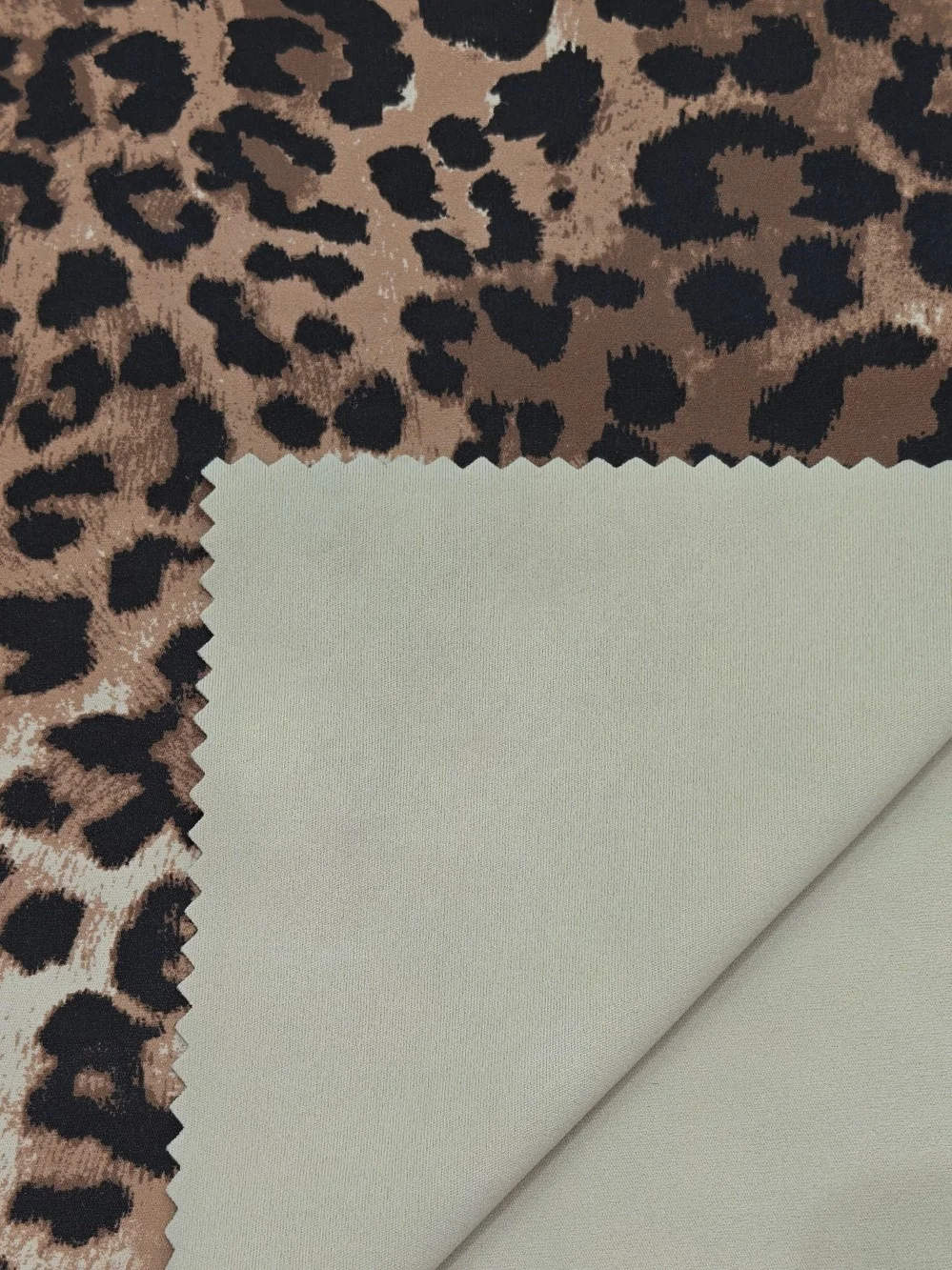
FABRIC, THEN GARMENT
Make the comparison
useful to your brief.
Keep the surface, material and garment requirements together as you build a selection.
Plan your sample comparison ↗Choose the substrate before judging the motif
Printed spandex fabric can refer to more than one base-fiber blend. Keep the full material description with the visual reference. A motif you like on one cutting does not identify the composition of another. Place the selected printed fabric beside the lining or adjoining solid material that will be used in the development sample.
Make the pattern scale visible
For printed nylon spandex fabric, show the motif over a useful area of the cutting, as well as in close-up. Set it against the intended panel and mark the direction. A small motif and a larger repeat create different layout questions at a seam, neckline or mirrored pair of pattern pieces.
Compare other material and pattern routes
Printed polyester spandex fabric appears in the range as another substrate option, including printed double-jersey selections. The cotton-spandex range offers a further material route. If the reference is about a knitted surface pattern rather than a printed color motif, compare the jacquard knit selection with that distinction in mind.
Bring a complete design reference
A printed knit fabric inquiry should include the garment, preferred substrate, artwork or motif reference, pattern scale and orientation. Add the sample requirement, color direction and estimated fabric quantity. Where a pattern must meet at a seam or run in a specific direction, show the panel layout so that requirement is explicit in the discussion.
BEFORE YOU SELECT
Questions for the fabric conversation.
Which material families are represented?
The selection includes printed nylon-spandex, polyester-spandex and cotton-spandex materials. Identify the preferred substrate as well as the motif when requesting a fabric selection.
How should I show a printed design requirement?
Include a motif reference at a useful scale and show its intended orientation on the garment panel. Add any seam placement or panel-matching requirements already established by your design team.
Can the same reference describe a jacquard texture?
Explain which feature you want to carry forward. Printed color and a knitted surface pattern are separate selection questions, even when the two references have a similar visual theme.
YOUR FABRIC, YOUR BRIEF
Build a sample list.
Start a fabric conversation.
Tell us what you are making and which articles you want to compare. Keep the fabric references and your project requirements together.
Request your fabric selection ↗- 01 / MATERIAL
- Choose the blend.
- 02 / SURFACE
- Find your texture.
- 03 / APPLICATION
- Bring the garment brief.
- 04 / NEXT STEP
- Request cuttings.