ARTICLE 5508 / POLYESTER–SPANDEX
82 Polyester 18 Spandex Fabric | Article 5508
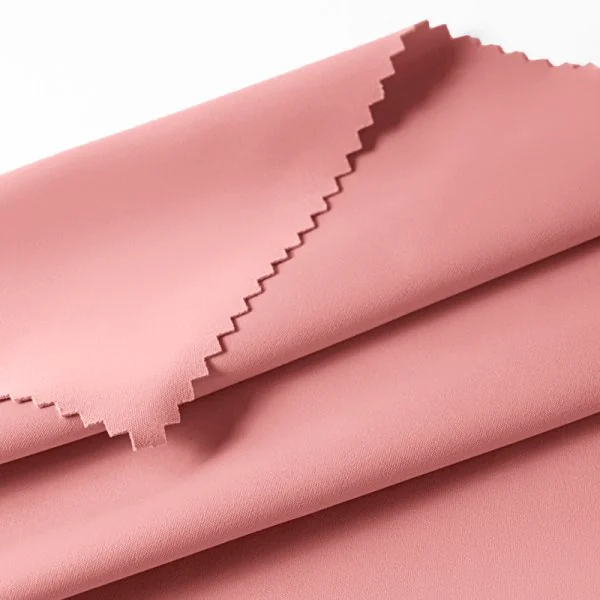
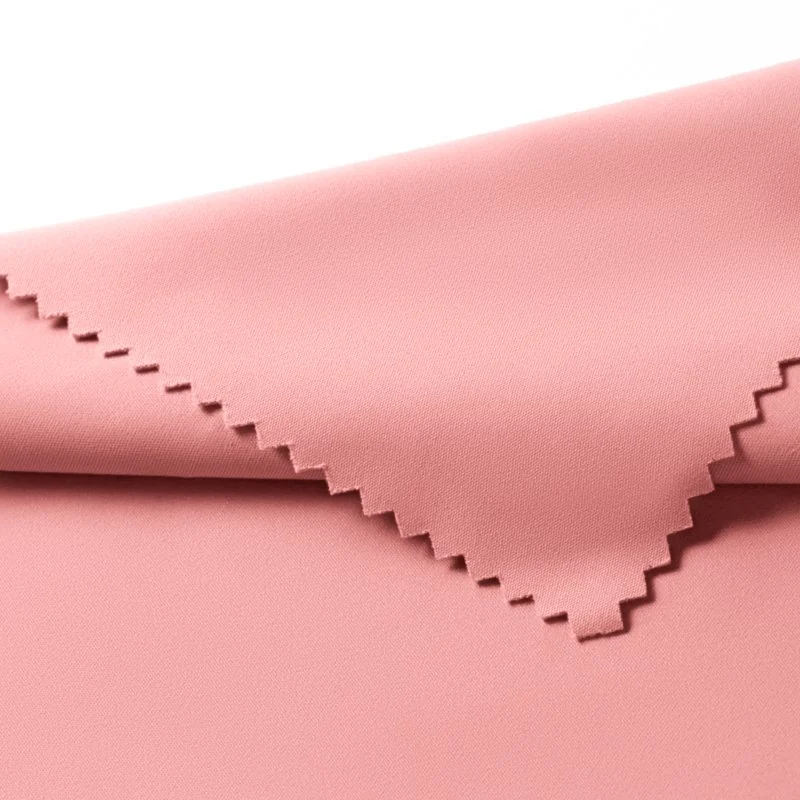
Article 5508 is an 82 polyester 18 spandex fabric offered for yoga garments, sportswear and fitted activewear. It has a smooth double-face surface and a specified width of 160 cm. This is the polyester article to sample when your design calls for a smooth face on both sides.
- Composition
- 82% polyester / 18% spandex
- Specified width
- 160 cm
- Fabric surface
- Smooth, double-face
- Applications
- Yoga garments, sportswear, fitted activewear
Article details
| Item | Specification |
|---|---|
| Article | 5508 |
| Composition | 82% polyester, 18% spandex |
| Surface | Smooth double-face |
| Specified width | 160 cm |
From the cutting to a garment detail
Start with a cutting big enough to examine both faces. Look at it beside the garment reference, then choose the face for the outside of your sample. A small mark on the reverse saves the sample maker having to make that choice again.
For a yoga top, the first useful sewing trial might be a neckline or armhole. A fitted panel gives you a different question: how does the planned seam look in that part of the pattern? There is no need to make every detail at once. Use the trial to settle the part that is still undecided, and keep it with the pattern version used to make it.
Choosing between polyester and nylon blends
The alternative article 6602 is 80% nylon and 20% spandex. It also has a smooth double-face surface and a specified width of 160 cm. Those shared details make it a useful reference if you are considering both fiber families for the same design.
The decision still needs the actual materials. A blend ratio cannot tell you which cutting has the hand or appearance you want. Label each one with its article number and full composition before the review. The nylon versus polyester guide covers the fiber names; your samples supply the observations for the particular garment.
Plan around the width
Use the 160 cm specification for preliminary planning, then establish the usable width for the order. The marker needs that usable figure and the edge allowance. Calculating yield from the listed width alone leaves part of the cutting decision unresolved.
Lay out the large pieces as well as the small ones. Turning a panel to fit a layout changes its orientation, so use the intended orientation in the sewing trial too. If the pattern is altered later, retain the earlier sample. It is easier to discuss a change when the two versions are on the table together.
What to include in your request
Quote 5508 and describe the garment, color direction and sample requirement. Add the estimated fabric quantity and any width or test requirements already in your brief. A reference cutting can explain a surface that is hard to put into words. For other articles in this material family, browse the polyester-spandex selection. The FTC textile-labeling guide provides a reference for keeping the fiber names consistent in your material paperwork.
ARTICLE 5508
Details for your selection.
Is 5508 an 82/18 nylon fabric?
5508 is polyester-spandex: 82% polyester and 18% spandex. An 82/18 nylon-spandex blend has a different base fiber. Include the article number and full fiber names in a comparison rather than using the ratio as the fabric name.
Does 18% spandex specify the stretch percentage?
It specifies the fiber content. A required extension or recovery value needs an agreed evaluation direction and conditions. Put the measurement requirement in the project brief so it can be discussed separately from the composition.
What surface and width are listed?
The listed finish is smooth double-face, at a specified width of 160 cm. Examine both faces when choosing the outside of the garment, and confirm the usable width needed for your marker.
Which uses can I discuss for this article?
The intended applications include yoga garments, sportswear and fitted activewear. Bring the intended construction into the sample discussion, especially a seam, edge or panel that has not yet been settled.
YOUR FABRIC, YOUR BRIEF
Build a sample list.
Start a fabric conversation.
Tell us what you are making and which articles you want to compare. Keep the fabric references and your project requirements together.
Request your fabric selection ↗- 01 / MATERIAL
- Choose the blend.
- 02 / SURFACE
- Find your texture.
- 03 / APPLICATION
- Bring the garment brief.
- 04 / NEXT STEP
- Request cuttings.